Repo-Level AI Agents: How Coding Assistants Learned to Reason Across a Whole Codebase
For years, "AI coding tool" meant one thing: something that watched the file you had open and guessed the next few tokens. It was useful, but it had the memory of a goldfish — close the tab, and it forgot the codebase existed.
That ceiling is gone. The coding agents getting attention in 2026 don't just finish your line — they search your repository, trace how a function is used across a dozen files, plan a change set, edit multiple files, run your tests, and report back. That's what people mean by repo-level reasoning, and it's the single biggest shift in how these tools work.
This post explains it simply: what changed, how it actually works under the hood, and where it still breaks.
The old ceiling: one file, no memory
Classic autocomplete tools work like this: the model sees the current file (maybe a couple of open tabs), and predicts what comes next. That's it. No search step. No idea what else in the project calls the function you're editing. No way to check if the suggestion actually works.
It's a bit like asking someone to edit a document while only showing them the current paragraph. They can make that paragraph read well. They have no way of knowing it now contradicts something on page 40.
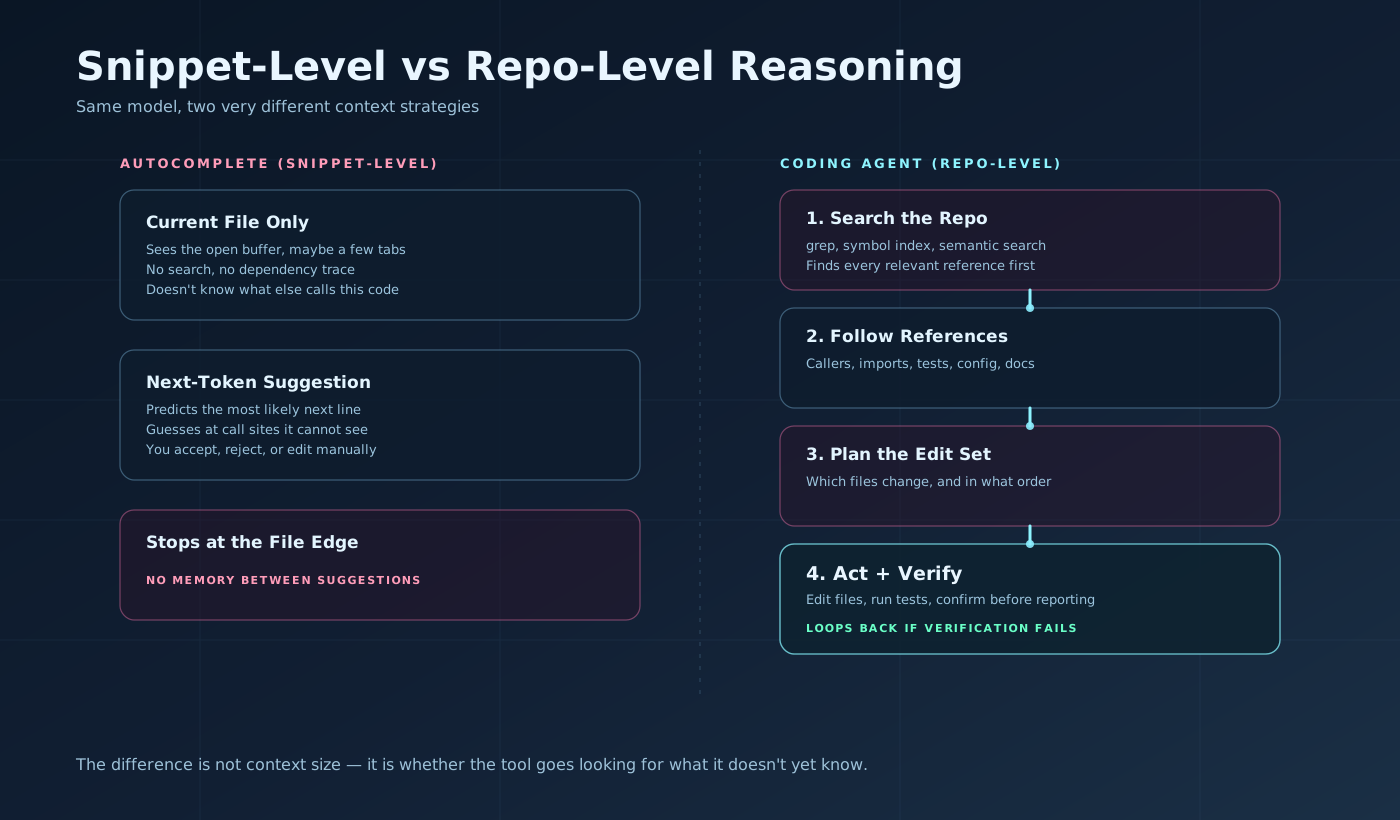 Same underlying model, two completely different context strategies.
What "repo-level reasoning" actually means
Here's the part that trips people up: repo-level does not mean the entire codebase gets stuffed into the model's context window. Even the biggest context windows are too small, too slow, and too unfocused for that — pasting in 4,000 files just adds noise the model has to wade through.
What actually happens is closer to how a good engineer explores an unfamiliar repo: they don't read every file top to bottom. They search for what's relevant, follow the thread, and stop once they have enough to act safely.
A repo-level agent does the same thing, using tools instead of instinct:
- Search — grep, a symbol index, or semantic/embedding search to find candidate files fast.
- Follow references — who calls this function, what imports this module, which tests exercise it.
- Assemble context on demand — pull only the relevant files and functions into the prompt, not the whole tree.
- Expand if needed — if the first pass isn't enough, go search again. This loop is what makes it "agentic" instead of a single guess.
The reasoning is real, but it's retrieved reasoning — built one search away at a time — not a photographic memory of your whole project.
A concrete example: renaming something that touches 12 files
Say you ask an agent: "Rename calculateTotal to computeOrderTotal everywhere, safely."
An autocomplete tool can't really attempt this — it doesn't know the other 11 places the function is used. A repo-level agent works through it like this:
- Search the repo for every reference to
calculateTotal— definition, imports, tests, and any string usage (dynamic imports, config, docs). - Read each file that turned up, not just the definition, to understand how the function is actually called.
- Build a plan: rename the definition, update every call site, update the tests, flag anything ambiguous (like a same-named function in an unrelated module).
- Make the edits across all the affected files.
- Run the test suite.
- Report what changed, and why — so a human can review the diff instead of trusting it blindly.
Nothing here requires memorizing the codebase. It requires following the graph of relationships until the plan is complete enough to act on — and then proving it worked.
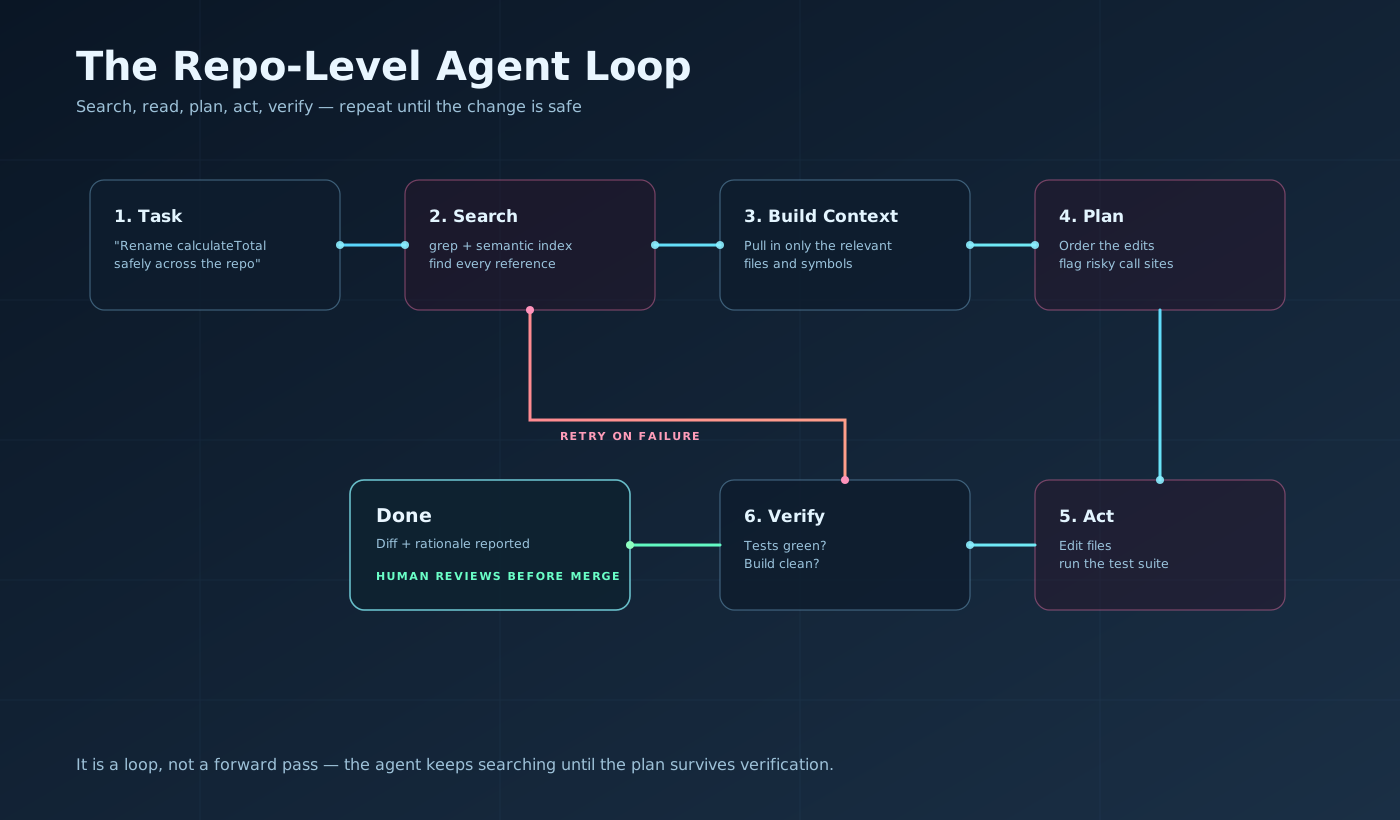 The loop, not the context window, is what makes repo-level reasoning work.
Why this is a bigger deal than it sounds
Multi-file changes used to be the boundary where AI tools handed control back to you. Now they're table stakes for a good coding agent. That changes what people trust these tools to do — bug fixes that span an API route and its caller, refactors that touch a shared utility and every consumer, dependency upgrades that ripple through config and tests.
More reach across the codebase is also more blast radius. An agent that can edit twelve files can also break twelve files, or — if it's reading untrusted content along the way — become the target of an attack, something covered in more depth in The Real Cost of AI Agents: Security, Prompt Injection, and Trust. The bigger the agent's reach, the more the guardrails and verification steps in Agent Reliability Blueprint matter, not less.
Where it still falls over
Worth staying honest about this — repo-level reasoning is a big upgrade, not a solved problem:
- Large monorepos strain retrieval. Ambiguous symbol names and stale indexes mean the search step can miss things a human would catch instantly.
- Tribal knowledge doesn't show up in a grep. If the reason a function is written a strange way lives in someone's memory and not the code, the agent won't find it.
- Confident, wrong plans happen. An agent can build a plausible multi-file plan on an unfamiliar architecture and still be wrong. This is exactly why the verify step — running real tests — matters more than the plan itself.
- Cost and latency scale with search-read cycles. Every extra round of "search again" is another round trip. Repo-level reasoning is not free.
Key Takeaways
- Repo-level doesn't mean "the whole repo in context" — it means agentic retrieval: search, read, expand, and pull in only what's relevant.
- The loop is Search → Build Context → Plan → Act → Verify → repeat, not a single forward pass.
- Multi-file changes are now a baseline expectation for coding agents, not a stretch feature.
- The tests that run after the agent acts matter as much as the plan it made — verification is the safety net, not the plan.
- Wider reach across your codebase means wider blast radius — pair repo-level agents with the reliability and security practices they now warrant.
Related Posts
- Why Would I Choose Claude Code? — a closer look at one agentic, CLI-native coding tool built around this exact loop.
- Why Would I Choose Codex? — how OpenAI's coding agent compares on the same repo-level ground.
- The Real Cost of AI Agents: Security, Prompt Injection, and Trust — what wider reach across a codebase means for your attack surface.
- Agent Reliability Blueprint: SLOs, Guardrails, and Human Override — the guardrails that make multi-file autonomy safe to ship.
- From Prompt Engineer to Agent Architect — the skill shift needed once prompts stop being your main safety control.