Why most agent demos fail in production
Agent demos look magical because the environment is clean, the tools are predictable, and no one is measuring blast radius.
Production is the opposite:
- Tool outputs drift and APIs timeout.
- Users ask long-tail questions your prompts never saw.
- Small hallucinations become expensive operational mistakes.
The fix is not "better prompting" alone. You need a reliability system around the model.
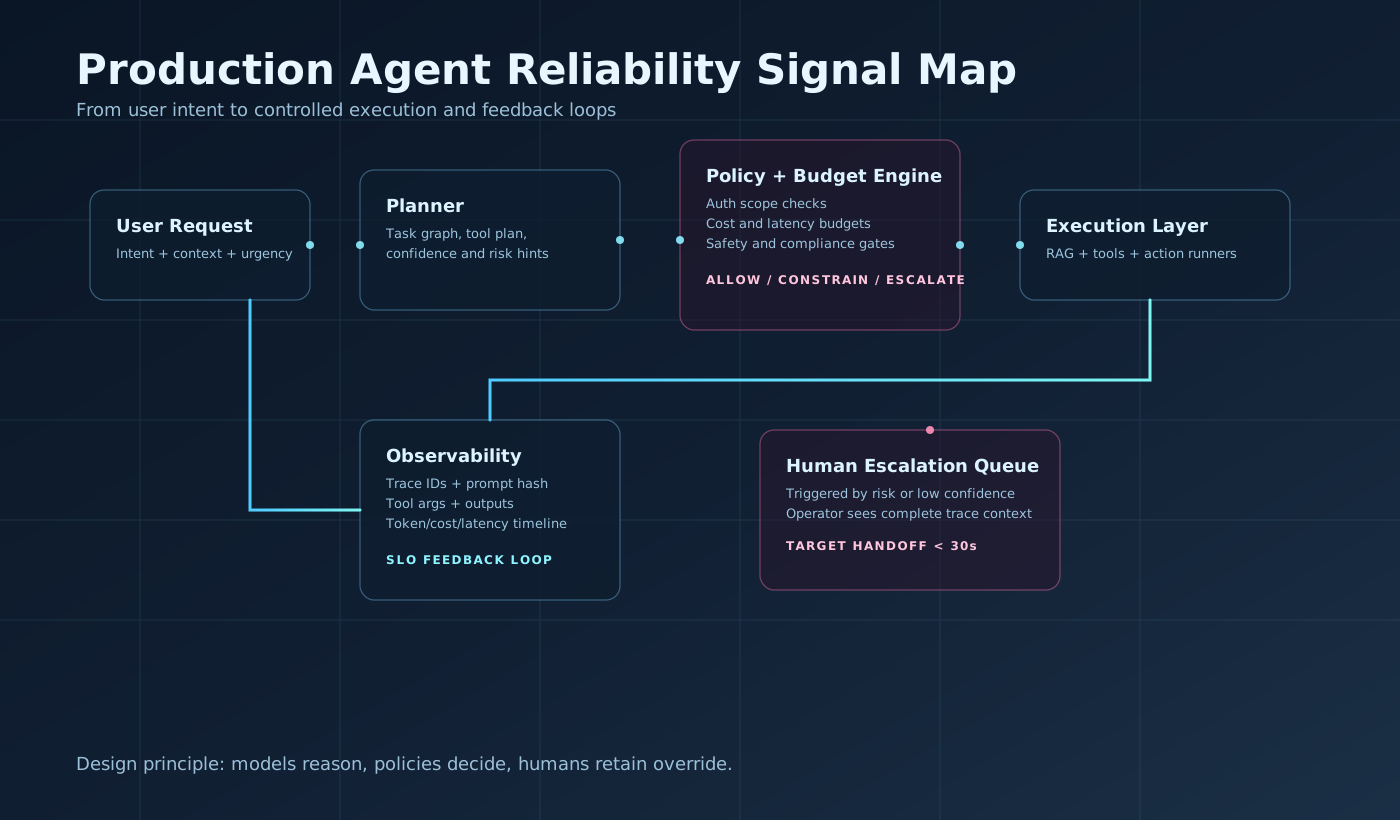
A production-ready agent stack should treat model calls like any other critical distributed system component: observable, budgeted, and reversible.
1. Define reliability in numbers, not vibes
Before adding more tools or workflows, define SLOs for your agent behavior.
Use explicit targets such as:
- Task success rate at least 95%
- Hallucination-with-action rate at most 0.5%
- P95 response latency at most 4.5s
- Escalation success (handoff completed) at least 99%
If you cannot measure these, you cannot safely scale agent autonomy.
2. Split control plane from execution plane
A common anti-pattern is letting one prompt decide everything. Instead, separate responsibilities:
- Control plane: policy checks, budget checks, routing, approvals
- Execution plane: retrieval, reasoning, tool execution, response synthesis
This allows you to reject unsafe plans before any side effects happen.
# Pseudo-flow: enforce policy before side effects.
def run_agent(request):
    plan = planner.generate_plan(request)

    decision = policy_engine.evaluate(
        plan=plan,
        risk_score=score_risk(plan),
        remaining_budget=get_budget(request.user_id)
    )

    if not decision.allow:
        return escalate_to_human(request, reason=decision.reason)

    return execute_plan(plan)
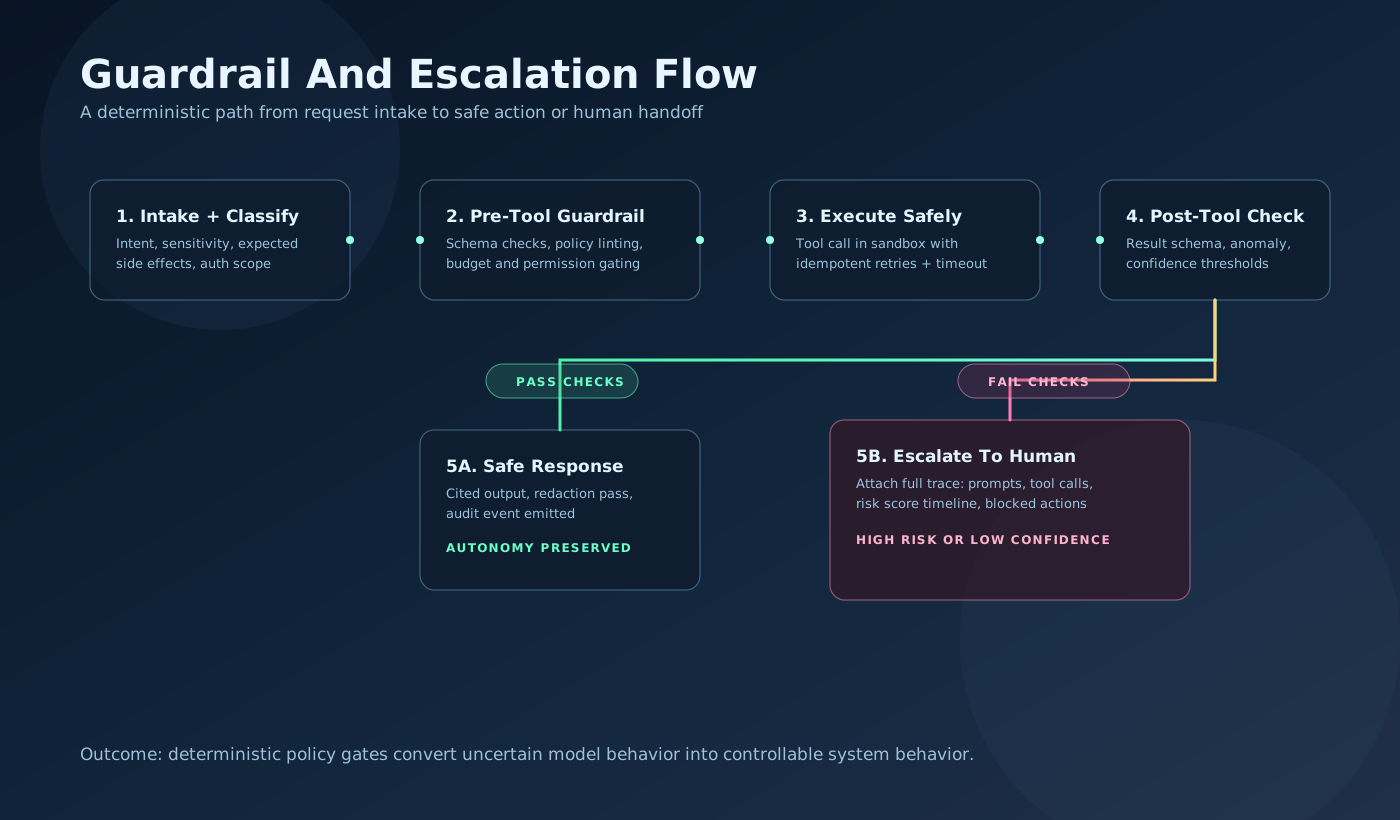
3. Add guardrails where damage can occur
Most teams place guardrails only on output text. That is too late.
High-value guardrail checkpoints:
- Pre-tool guardrail: validate tool name, arguments, and auth scope
- Mid-plan guardrail: block step amplification (infinite loops, retries)
- Post-tool guardrail: schema and anomaly validation for tool responses
- Pre-response guardrail: redaction, citation checks, policy linting
Think of each gate as a circuit breaker, not a style filter.
4. Design escalation ladders, not binary fail states
When confidence drops, the agent should degrade gracefully:
- Retry with constrained context and deterministic tools
- Switch to a narrower specialist chain
- Require user confirmation for high-impact actions
- Hand off to a human operator with full trace context
Escalation should be cheap, fast, and respectful of user time.
5. Log traces that support root-cause analysis
For every turn, capture:
- Prompt template hash and model/version
- Retrieved documents and ranking scores
- Tool calls with arguments and return payload summaries
- Policy decisions and risk score history
- Token usage, latency, and final outcome label
A useful trace is one that answers: "Why did this action happen, and how do we prevent the bad version next time?"
6. Run weekly reliability drills
Chaos engineering applies to agents too.
Run scheduled drills:
- Simulate retrieval outages
- Inject stale or contradictory context
- Force tool schema mismatches
- Drop confidence signals to verify escalation
Then compare your SLOs before and after each mitigation. Reliability is a continuous system, not a launch checklist.
Final takeaway
Strong agent products are not just smart. They are controllable.
Ship autonomy with explicit budgets, measurable guardrails, and deterministic escalation paths. That is how you move from flashy demo to trusted production system.