MCP Hit 97 Million Installs — Here's Why It's the TCP/IP of AI Agents
I was skeptical of MCP for longer than I should have been.
My reasoning was defensible: another protocol, another abstraction layer, another thing to learn before the real work starts. The AI tooling space had already littered the ground with half-adopted standards. I figured MCP would get integrated into a few flagship products, collect some GitHub stars, and eventually get superseded by whatever Anthropic or OpenAI shipped next.
Then it hit 97 million installs. And I had to actually think about what I got wrong.
TCP/IP Didn't Win on Merit
Here's the thing people forget about TCP/IP: it was not the best option on the table in the late 1970s. OSI was arguably more rigorous. DECnet had real commercial backing. AppleTalk worked fine within its ecosystem.
TCP/IP won because it became the layer everyone agreed to stop arguing about. The moment that happened, all the interesting engineering energy moved up the stack — to HTTP, to application protocols, to the actual products people wanted to build. The protocol layer became load-bearing infrastructure precisely by becoming invisible.
MCP is doing the same thing. Not because it's technically superior to every custom function-calling schema you've rolled yourself, but because it's the layer the industry has agreed to forget about.
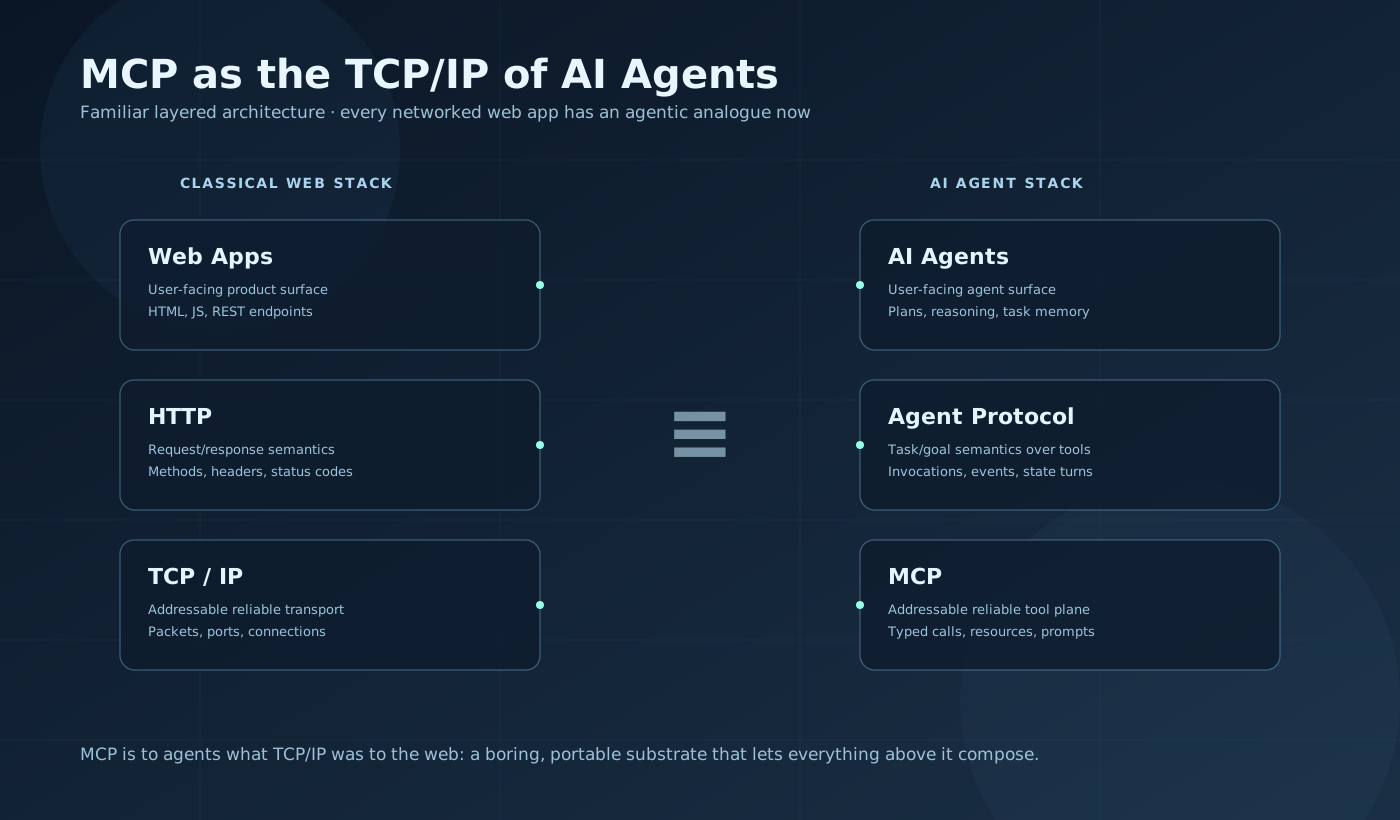
Diagram: The structural parallel between TCP/IP's network stack and MCP's agent stack. In both cases, the middle layer is the one that matters least once it's settled.
The Before/After Is Embarrassing
Before MCP, wiring a tool into an agent looked like this — and every team wrote their own version of it:
# Before: bespoke function-calling glue, repeated across every integration
def call_tool(name: str, args: dict) -> str:
    if name == "search_docs":
        return search_docs(args["query"], top_k=args.get("top_k", 5))
    elif name == "run_query":
        return db.execute(args["sql"])
    elif name == "send_email":
        return smtp.send(args["to"], args["subject"], args["body"])
    else:
        raise ValueError(f"Unknown tool: {name}")

# Every new tool = new branch. Every new agent = rewrite this function.
With an MCP server, the same surface looks like this:
# After: MCP server — write it once, any compliant agent picks it up
from mcp.server import MCPServer, tool

server = MCPServer("my-tools")

@server.tool()
def search_docs(query: str, top_k: int = 5) -> str:
    """Search internal documentation."""
    return docs_index.query(query, top_k=top_k)

@server.tool()
def run_query(sql: str) -> str:
    """Execute a read-only database query."""
    return db.execute(sql)
The agent doesn't know you wrote it. It doesn't care which agent framework is consuming it. It just works — because both sides speak the same protocol.
That's the USB-C quality. Not glamorous. Deeply, structurally useful.
97 Million Is Not a Popularity Number
When I see a library hit a million downloads I think: popular. When I see 97 million monthly SDK downloads, I think: the debate is over.
At that scale, the question stops being "should I adopt MCP?" and becomes "what do I build now that the plumbing is settled?" That's exactly where TCP/IP left us in the early 90s — and what followed was two decades of people building interesting things on top of boring infrastructure.
I was wrong to treat MCP as just another contender. It already won. The interesting question is what gets built in the layer above it.
For deeper context on why this crossed the infrastructure threshold — Linux Foundation governance, AAIF, what it means for vendor lock-in — see MCP and Agentic AI Have Crossed the Infrastructure Threshold.
Key Takeaways
- TCP/IP won by becoming invisible. MCP is on the same trajectory.
- 97M installs is a "debate is over" signal, not just a popularity metric.
- The before/after on tool-wiring is stark — MCP removes an entire class of per-integration glue code.
- The engineering energy will now move up the stack. That's where to focus.
Related Posts
- Why Would I Use an MCP Server? — Practical breakdown of when MCP fits and when it doesn't, with code examples.
- MCP and Agentic AI Have Crossed the Infrastructure Threshold — Governance, Linux Foundation, and what "infrastructure" actually means here.
- Agentic AI: Why It Gets Fired — The failure modes that matter once you're building on stable agent infrastructure.
Changed your mind about MCP recently, or still skeptical? Drop your reasoning in the comments — especially if you think I'm wrong about the TCP/IP analogy.